

What Makes a Trading Card Feel Premium? Materials, Finishes, and Print Quality
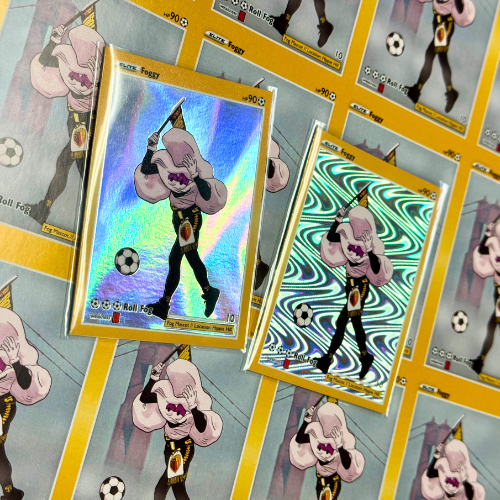
Holographic parallel cards created for the SF City Football Club, demonstrating how specialty finishes can elevate a set from standard cards to a true collector's edition.
When someone creates a custom trading card for the first time, almost all of their attention goes into the design.
The artwork. The photos. The colors. The layout. The special details that make the card feel unique. The design is the fun part.
But here's something I've learned after working on hundreds of custom trading card design and printing projects.
A great design can only go so far if the printing isn't right.
Because once a card leaves the screen and lands in someone's hands, everything changes.
The weight matters. The texture matters. The finish matters.
Suddenly you're not looking at a digital file anymore. You're judging a physical object.
And that's where printing decisions start to make a bigger difference than most people expect.
The First Thing People Notice Is How a Card Feels
Before anyone reads a stat, admires the artwork, or notices a special effect, they pick up the card.
That moment happens almost instinctively. Which is why cardstock matters so much.
Most premium trading cards are printed on thick card stock. For most projects, I print on 16pt stock because it strikes a great balance between durability, feel, and collectibility.
Anything thinner can feel more like a flyer. Anything significantly thicker can start feeling more like packaging than a card.
There is a reason most major trading card manufacturers have settled on a similar feel over the years. And once you've held a properly printed card, it's difficult to settle for anything less.
Gloss or Matte? You're Really Choosing a Personality
People often think finishes are purely aesthetic. I think they're emotional.
A gloss finish immediately feels energetic. Colors appear richer. Images seem sharper. Light reflects across the surface, making artwork jump out from the card.
That's why gloss works so well for sports cards, gaming cards, promotional sets, and projects built around bold visuals.
Matte finishes tell a different story. They're quieter. More understated. More refined.
A matte card often feels less like a product and more like a keepsake. That's one reason it works beautifully for family collections, memorial cards, storytelling projects, and premium photo cards.
Neither option is objectively better.
The question isn't which finish looks best. It's which finish fits the personality of the project.
The Small Upgrades That Make a Big Difference
There's a point where a card stops looking good and starts feeling special. That's usually where specialty finishes enter the conversation.
UV coating is one of those details people don't always notice immediately, but they definitely notice the effect. Whether applied across the entire card or used selectively on artwork and logos, it adds depth, shine, and an extra layer of protection.
Then there are foil accents. Gold foil. Silver foil. Colored metallic foils.
These finishes instantly create a sense of rarity. They draw attention to names, logos, borders, and key design elements without overwhelming the overall card.
The best foil applications don't scream for attention. They reward people for looking closer. That's a big difference.
Why Colors Sometimes Look Different in Print
This is one of the most common surprises for first-time card creators.
The card arrives. The design looks great. But the colors aren't exactly what they expected.
The reason is simple. Screens and printers speak different languages. Most digital designs are created in RGB color mode because that's how screens display color. Printing, however, relies on CMYK ink values.
The translation isn't always perfect.
Certain bright blues, greens, and neon tones that look vibrant on a monitor simply can't be reproduced in exactly the same way on paper.
That's why experienced printers always recommend designing with print in mind from the beginning.
It's also why high-resolution artwork matters. A beautiful image viewed on a screen can quickly lose its impact if the source file isn't sharp enough for print production.
The rule is simple: if quality matters, start with quality.
Printing More Usually Costs Less
This is one of the stranger realities of commercial printing.
Printing one card isn't difficult. Printing one hundred cards isn't much harder. Printing one thousand cards often becomes dramatically more efficient.
As production quantities increase, setup costs are spread across more units, which lowers the cost per card. That's why larger print runs often provide significantly better value than people expect.
Of course, not every project requires a large order. Sometimes a small proof run is the smartest decision. Testing a design before committing to a larger production can save time, money, and frustration later.
The important thing is understanding your goals before the presses start running.
The Best Printing Is Invisible
This might sound strange coming from someone talking about print quality, but the best printing often goes unnoticed.
Not because it's ordinary. Because it removes distractions.
Nobody picks up a beautifully printed card and says, "What excellent color calibration."
They simply enjoy the card. The artwork feels vibrant. The finish feels intentional. The details feel sharp.
Everything works together so naturally that people focus on the collection itself rather than the production process behind it.
That's exactly what great printing should do.
Packaging Matters More Than People Realize
The card is only part of the experience.
Think about opening a pack of cards as a kid. Part of the excitement was not knowing what was inside.
The same principle applies today. Packaging creates anticipation before someone even sees the card.
A custom foil pack creates anticipation.
A slab turns a card into something that feels worthy of display.
Even a simple protective sleeve can change how someone perceives the card.
The best projects think about the entire experience, not just the card itself.
A Great Design Deserves Great Production
At the end of the day, printing isn't the glamorous part of a trading card project. Nobody gets excited about color profiles or cardstock specifications.
But those details are what transform a digital design into something people want to collect, display, trade, and keep.
A premium card isn't defined by a single feature. It's the combination of materials, finish, color accuracy, craftsmanship, and attention to detail working together.
Get those elements right, and the difference is immediately obvious. Because when someone finally holds the finished card in their hands, they aren't judging the file you created.
They're judging the experience you delivered. And that's where great printing earns its reputation.
Related Reading
Ready to Print Your Trading Cards?
Whether you already have print-ready artwork or need help with the design, I can help make sure your cards are produced to professional standards.
Request a Quote or Request Free Samples to get started.