

Why More Businesses Are Using Custom Trading Cards for Branding
Most businesses have no shortage of ways to put their logo in front of people.
Pens. Stickers. Brochures. Tote bags.
The problem is that most of those things are easy to ignore.
Custom trading cards are different. People pick them up. They flip them over. They ask questions. And most importantly, they remember them.Those are fair questions. The problem is that many branding efforts end up looking remarkably similar. Every company claims innovation. Every company talks about customer experience. Every company wants to tell a compelling story.
The challenge isn't creating a brand. The challenge is creating something people actually remember.
That's where custom trading cards become surprisingly interesting.
At first, they don't sound like a corporate branding tool. They sound more like something you'd find in a collector's binder.
But that's exactly the point. Nobody expects them. And in branding, unexpected often beats expensive.
Redwood Services Trading Card Pack opening from their annual Leadership Summit. Incorporating trading card experiences like this turn networking and conferences into a exciting, memorable event with lasting keepsakes.
Giving Your Brand Story a Physical Form
One of the biggest mistakes companies make is assuming people will spend time reading their story. Most won't.
Not because they don't care, but because they're busy.
A trading card forces simplicity. You only have so much space, which means you have to focus on what actually matters.
Imagine creating a series of cards that each represent a piece of your brand story. One highlights your founding mission. Another showcases a key product. Another focuses on a company value or customer success story.
Instead of overwhelming people with information, you're giving them small pieces of a larger narrative.
People tend to remember stories better when they discover them gradually.
Standing Out at Events Without Trying Too Hard
Trade shows can be exhausting. Attendees spend hours walking past nearly identical booths, collecting nearly identical brochures, hearing nearly identical pitches.
After a while, everything starts blending together. I've seen companies spend tens of thousands of dollars on exhibition spaces only to struggle with one basic problem: getting people to stop.
Trading cards can help solve that. A simple branded card station often generates more curiosity than another banner wall filled with marketing slogans. Visitors naturally want to see what the cards are about. They pick them up. They ask questions.
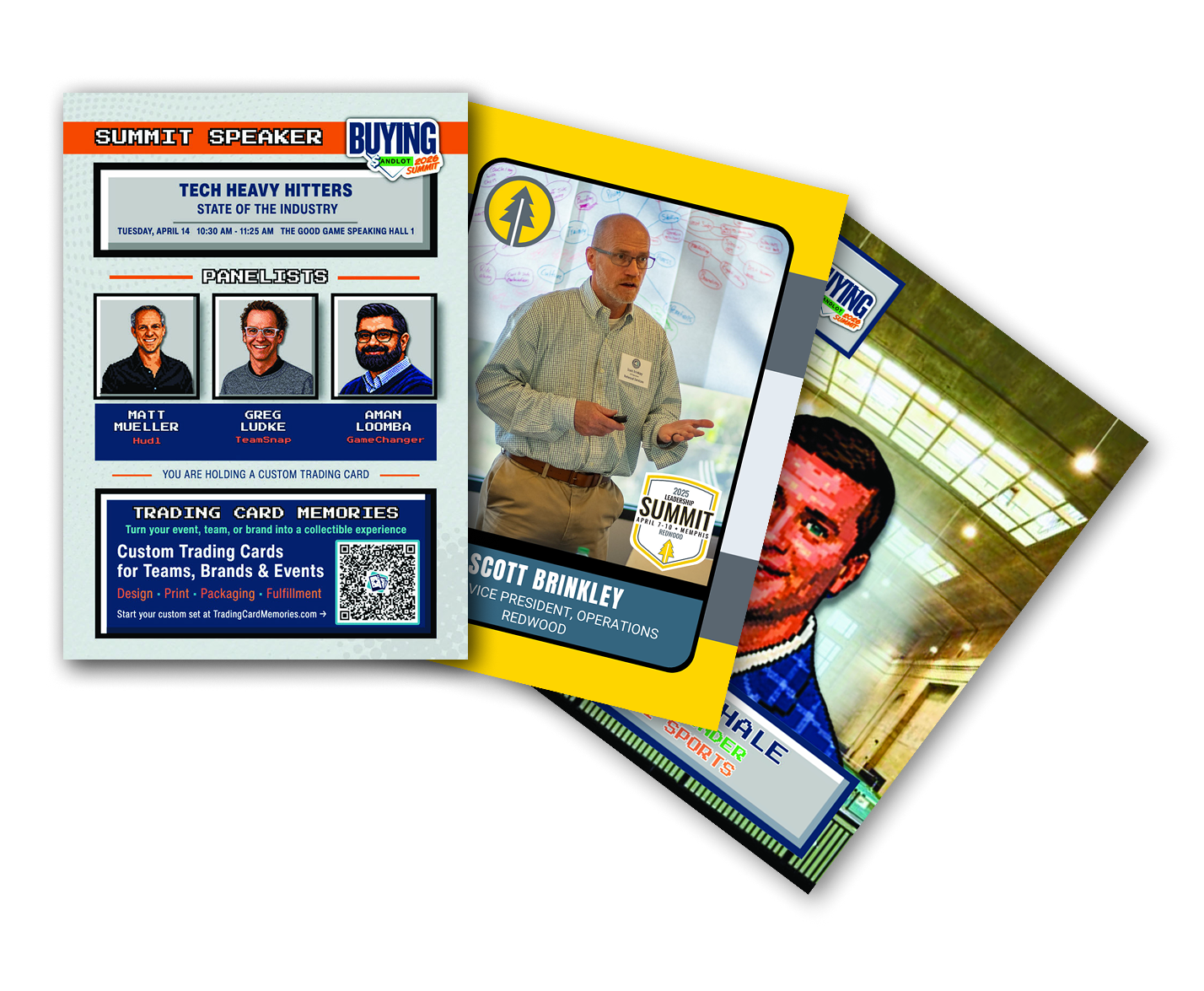
Examples of trading cards created for business conferences.
And that's the real goal. Not the card itself. The conversation it creates.
Some companies even package cards in foil packs or create event-exclusive editions. Suddenly attendees aren't just receiving marketing materials. They're participating in an experience.
Using Trading Cards to Highlight Partnerships
Strong brands understand the value of association. That's why collaborations work. When two respected organizations come together, both benefit from the credibility and audience of the other.
Trading cards offer a creative way to showcase those partnerships.
A fitness company might create a limited-edition card series with a local sports club. A software company could collaborate with an industry expert. A charity might partner with a sponsor to highlight shared initiatives.
The card becomes more than a promotional item. It becomes a symbol of the relationship. And people tend to pay attention when trusted names appear together.
Turning Marketing Into Something People Explore
Most marketing materials follow a predictable format. Here's who we are. Here's what we do. Here's why we're different.
The information may be valuable, but the presentation rarely surprises anyone. Trading cards create opportunities for storytelling that feel more interactive.
A company newsletter could introduce a new leadership team member through a digital trading card. A product launch could feature collectible product cards. A social campaign might reveal a new card every week, encouraging followers to come back for the next release.
The content itself isn't necessarily changing. The experience is. And experience often determines whether people engage or scroll past.
The Shelf-Life Problem Most Promotional Products Have
Let's be honest. Most branded giveaways aren't exactly cherished possessions. A pen gets used until it disappears. A tote bag gets tossed into a cupboard. A stress ball survives for a few months before someone throws it away.
There's nothing wrong with promotional products. They have their place. But very few of them create emotional attachment.
Trading cards tap into something different. People naturally view them as collectibles rather than disposable items. Even a simple card can end up pinned to a noticeboard, displayed on a desk, or tucked away in a drawer because it feels worth keeping.
That extra visibility matters. Branding isn't always about making the biggest impression.
Sometimes it's about creating dozens of small reminders over time.
What Businesses Put on Custom Trading Cards
One of the first questions I get is what actually goes on a business trading card.
The answer depends on the goal.
Some businesses feature employees. Others highlight products, services, company milestones, customer success stories, or event promotions.
The best cards are the ones that tell a story while staying simple enough to be understood in a few seconds.
Why This Works
The interesting thing about custom trading cards isn't the printing, the design, or even the collectible aspect.
It's the psychology. People engage with things that feel unique. They remember things that feel personal. And they're far more likely to interact with a brand when the experience feels different from everything else competing for their attention.
That's what good branding has always been about. Being remembered longer.
Custom trading cards won't replace your website, advertising strategy, or content marketing efforts. They aren't a magic solution.
What they can do is give your brand a format people don't expect and, more importantly, one they may actually want to keep.
In a marketplace where attention is increasingly difficult to earn, that's not a bad advantage to have.
If you're exploring new ways to strengthen your brand presence, create memorable customer experiences, and tell your story in a more engaging format, custom trading cards are worth considering. Sometimes the most effective branding tools are the ones nobody else is thinking about.
Ready to Print Your Trading Cards?
Whether you already have print-ready artwork or need help with the design, I can help make sure your cards are produced to professional standards.
Request a Quote or Request Free Samples to get started.